





User feedback: NOVO hospital, a model for launching a RLT (RadioLigand Therapy) program
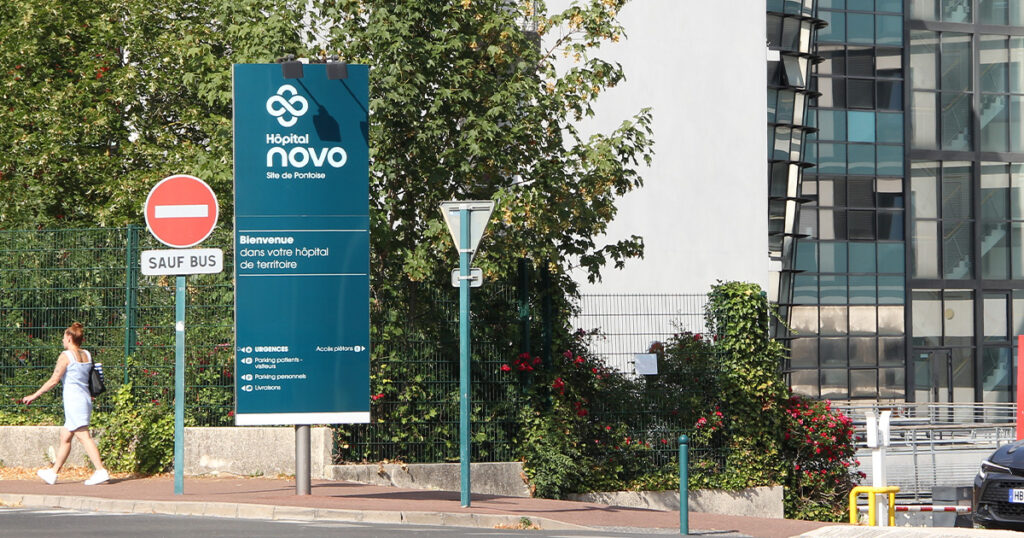
Located about 30 kilometers from Paris, France, NOVO Hospital (North-West Val d’Oise) serves a densely populated area covering part of the Val d’Oise and Oise departments, representing approximately 520,000 inhabitants across urban, suburban, and rural communities.
With more than 1,800 beds, it is a major regional hospital providing comprehensive medical, surgical, obstetric, pediatric, and psychiatric care. Oncology is a strategic priority, covering the entire patient pathway from diagnosis to supportive care, supported by strong expertise in urology, ENT, thoracic surgery, breast surgery, medical oncology, hematology, pulmonology, and dermatology.
Equipped with an advanced imaging platform comprising four systems (one PET/CT scanner, two hybrid gamma cameras, and one CZT camera dedicated to nuclear cardiology), the institution became the first non-university hospital and non-cancer center in the Paris region to offer RLT (RadioLigand Therapy) on an outpatient basis.
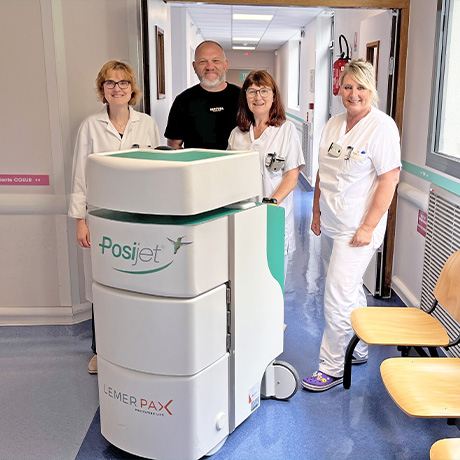
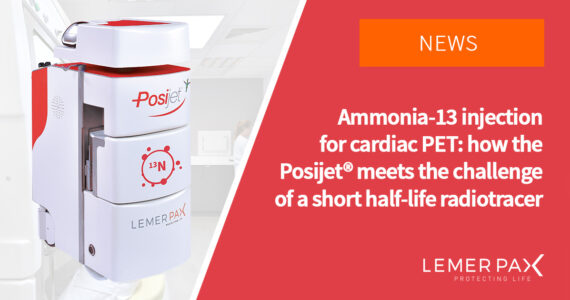
Already equipped with a first Posijet® system since 2021 for Fluorine-18 diagnostic imaging, the department decided to acquire a second unit to support the launch of its RLT program and the growth of its activity. The choice immediately fell on the Posijet® Therapy Module, a solution fully aligned with the department’s strategic ambitions and enabling the expansion of its therapeutic offering.
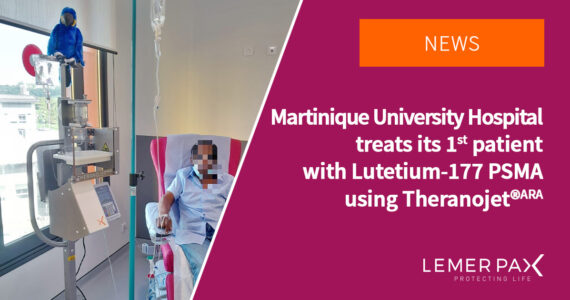
This milestone became a reality on May 22, 2025, with the admission of the first patient for RLT (RadioLigand Therapy).
Implementing RLT at NOVO hospital: a team-driven initiative
The project, initiated by Dr. Bleichner-Perez, Nuclaer Medicine doctor and head of department, was based on two key observations:
1 – For certain approved indications, RLT may now be administered in an outpatient setting, enabling flexible implementation without requiring shielded inpatient rooms or the associated infrastructure constraints.
2 – The clinical rationale was clear: the high prevalence of prostate cancer, combined with the significant volume of urology activity both at NOVO Hospital and within the public and private healthcare facilities across Val d’Oise, fully supported this strategic direction.
With the support of the hospital management team, the department was able to confidently initiate the administrative procedures required to launch this activity. The institution obtained authorization from the French Authority for Nuclear Safety and Radiation Protection (ASNR) for the possession and use of Lutetium-177, a process that took approximately 18 months, together with the healthcare activity authorization issued by the Regional Health Agency (ARS). Compliance with the regulatory requirements applicable to outpatient therapeutic nuclear medicine activities was achieved through extensive planning and preparation.
The success of the project was above all driven by people. A multidisciplinary team including nuclear medicine physicians, nuclear medicine technologists, radiopharmacists, medical secretaries, a medical physicist, a nurse manager and radiation protection specialists worked together around a shared objective: delivering the highest standard of patient care.

There was genuine anticipation surrounding the implementation of RLT. Professionally, it has changed the way we interact with patients. The project succeeded because the teams were fully engaged and gave it the momentum it needed.
Dr. Bleichner-Perez,
Head of Nuclear Medicine Department, NOVO Hospital
A versatile standardized system for both Diagnostic and Therapeutic procedures
With the installation of the second Posijet® unit in 2024, departmental workflows became more streamlined, improving day-to-day operations for both healthcare professionals and patients.
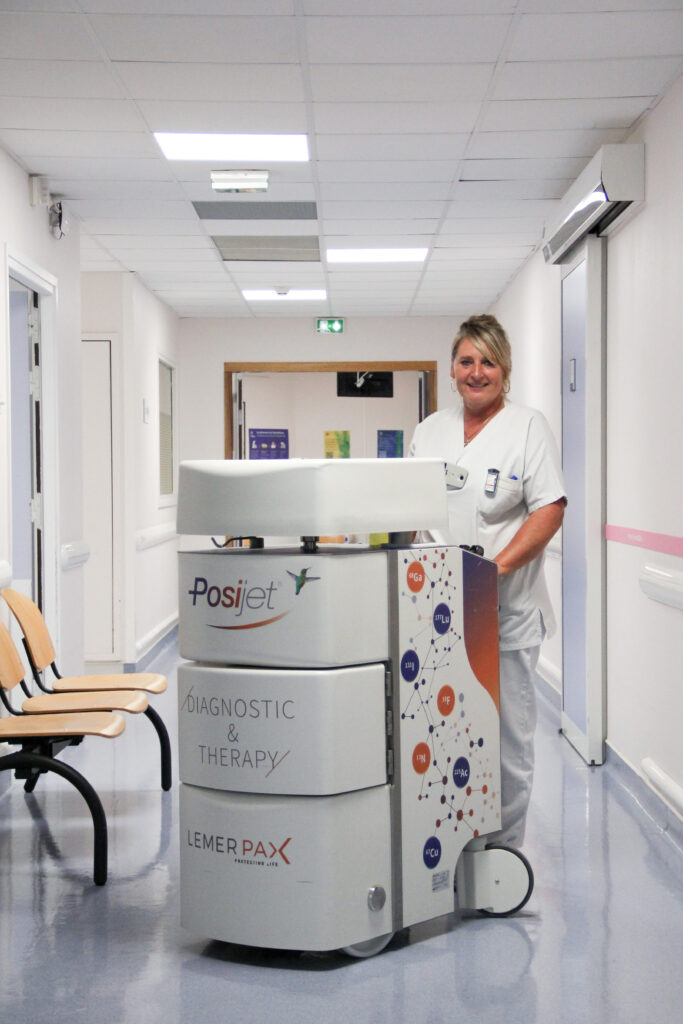
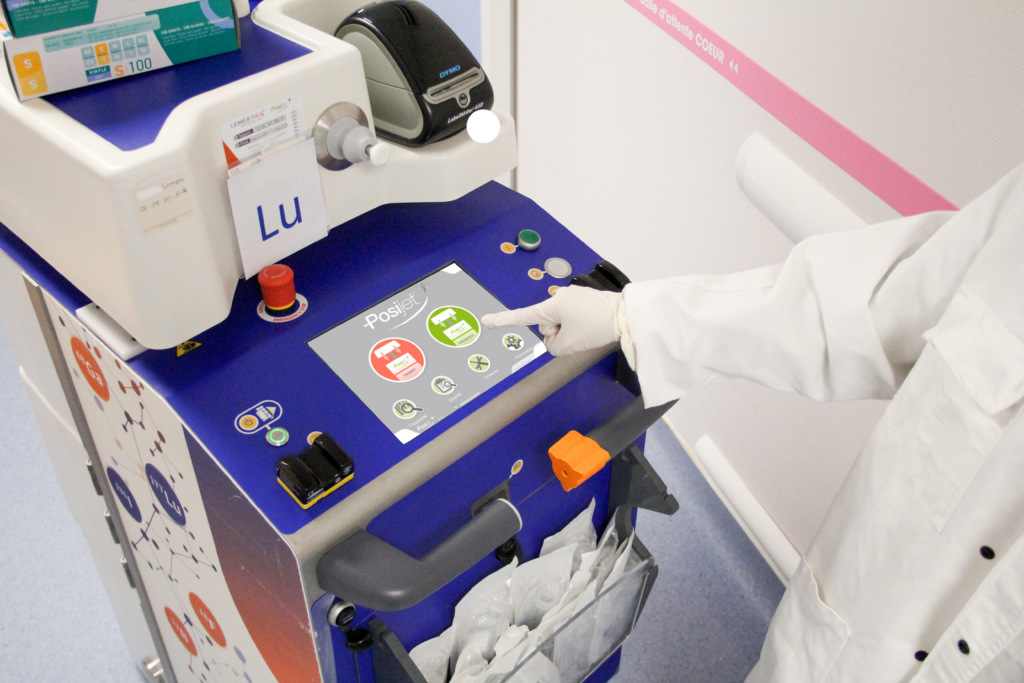
The Posijet® system stands out for its versatility, supporting both the administration of Fluorine-18 radiopharmaceuticals for molecular imaging procedures and therapeutic radiopharmaceuticals. This flexibility enabled nuclear medicine technologists to manage a broad range of protocols without increasing workload, as teams were already familiar with the diagnostic configuration of the system.
The only limitation identified by users concerns the current absence of dedicated administration sets for certain radiopharmaceuticals routinely used in clinical practice, such as amyloid plaque imaging tracers and Estrotep®. The addition of these capabilities, eagerly anticipated by the clinical team, would position Posijet® as one of the most comprehensive solutions available for both fluorinated diagnostic tracers and radioligand therapies.
Furthermore, the launch of the RLT program took place during a period of major radiopharmacy refurbishment and regulatory compliance work. The mobility of the Posijet® system proved particularly valuable, enabling continuity of operations and preventing interruptions to patient services.
Benefits observed by the institution:
- More efficient workflow organisation, allowing technologists to dedicate more time to patient interaction and support.
- Reduced patient waiting times, enabling the department to accommodate an increasing number of patients.
- Highly accurate activity administration, thanks to the dose calibrator integrated into the system.
The Nuclear Medicine Department at the Pontoise site of NOVO Hospital has demonstrated its ability to bring together multidisciplinary teams around a common objective and successfully transform its organisation for the benefit of patients.
Publication notes and disclaimer
| Product referenced: Posijet®, a medical device manufactured by Lemer Pax (Nantes, France). Please refer to the manufacturer’s instructions for use for indications, precautions, and contraindications. This publication constitutes an institutional user experience testimonial and does not represent comparative advertising. This publication has been produced with the written consent of NOVO Hospital and Dr Bleichner-Perez for the use of the institution’s name, professional title, and quotation. Date of content preparation: 18 August 2026. |

 France

