





CDMO and Radiopharmaceuticals: What is a production line and How is it equipped?
The production of radiopharmaceuticals is experiencing unprecedented growth, driven by the rise of nuclear medicine and the arrival of major new pharmaceutical players.
To meet this demand, new CDMO (Contract Development and Manufacturing Organization) lines dedicated to radio-medicine are emerging. Lemer Pax, with its long-standing expertise, helps equip them with its shielded production hot cells.
The radiopharmaceutical market enters an industrial phase
Nuclear medicine is undergoing a profound transformation. New theranostic molecules, new isotopic pairings, and the growing involvement of major pharmaceutical groups make this sector one of the most dynamic of the decade. This rapid growth is generating unprecedented demand for radiopharmaceutical production capacity compliant with GMP standards (Good Manufacturing Practice) — capacity that few players master end to end.
It is in this context that CDMOs specializing in radiopharmaceuticals are becoming a strategic link in the value chain. But setting up a CDMO line for radio-medicine is anything but a standard process : it requires specific infrastructure, high-performance shielded equipment, and cross-disciplinary expertise in radiation protection, regulatory affairs, and industrial pharmaceutical production.
CDMO : what exactly are we talking about ?
A CDMO (Contract Development and Manufacturing Organization) is a service provider that gets involved from the earliest phases of medicine development, takes charge of a medicine’s industrial production, and supports the sponsor throughout the product’s entire lifecycle :
- Pre-formulation development and analytical method development
- Stability studies and active ingredient optimization
- Process scale-up (from gram scale to industrial production)
- Production of clinical and commercial batches under GMP conditions
- Regulatory support, technology transfer, and supply chain management
For a pharmaceutical or biotech company, working with a CDMO reduces infrastructure costs, speeds up time-to-market, and allows the company to focus on innovation by entrusting the technical and industrial phases to an experienced partner.
Why are radiopharmaceutical CDMOs a special case ?
Radiation protection : a structuring constraint from the design stage
The radionuclides used in nuclear medicine — whether alpha, beta, or gamma emitters — expose operators to ionizing radiation whose energy can reach several hundred keV. Production line design must factor in this constraint from the outset, through :
- Shielded enclosures sized according to the nature and activity of the isotopes handled
- Ventilation and filtration systems suited to radioactive gases
- Work procedures designed to limit operator exposure (the ALARA principle)
- Radiological qualification of every workstation
This isn’t a matter of adding radiation protection to an existing pharmaceutical line : the line must be designed around radiation protection from the start.
GMP compliance in a constrained environment
Good Manufacturing Practice (GMP) imposes strict requirements for traceability, equipment qualification, process validation, and deviation management. In a radiopharmaceutical environment, these requirements collide with practical realities: limited access to production areas, remote handling via manipulators, and cleaning and decontamination under shielded conditions.
Designing a radiopharmaceutical CDMO line therefore means reconciling two demanding and, at times, inherently conflicting — regulatory logics : the operational flexibility required by GMP and the protective rigor imposed by isotope physics.
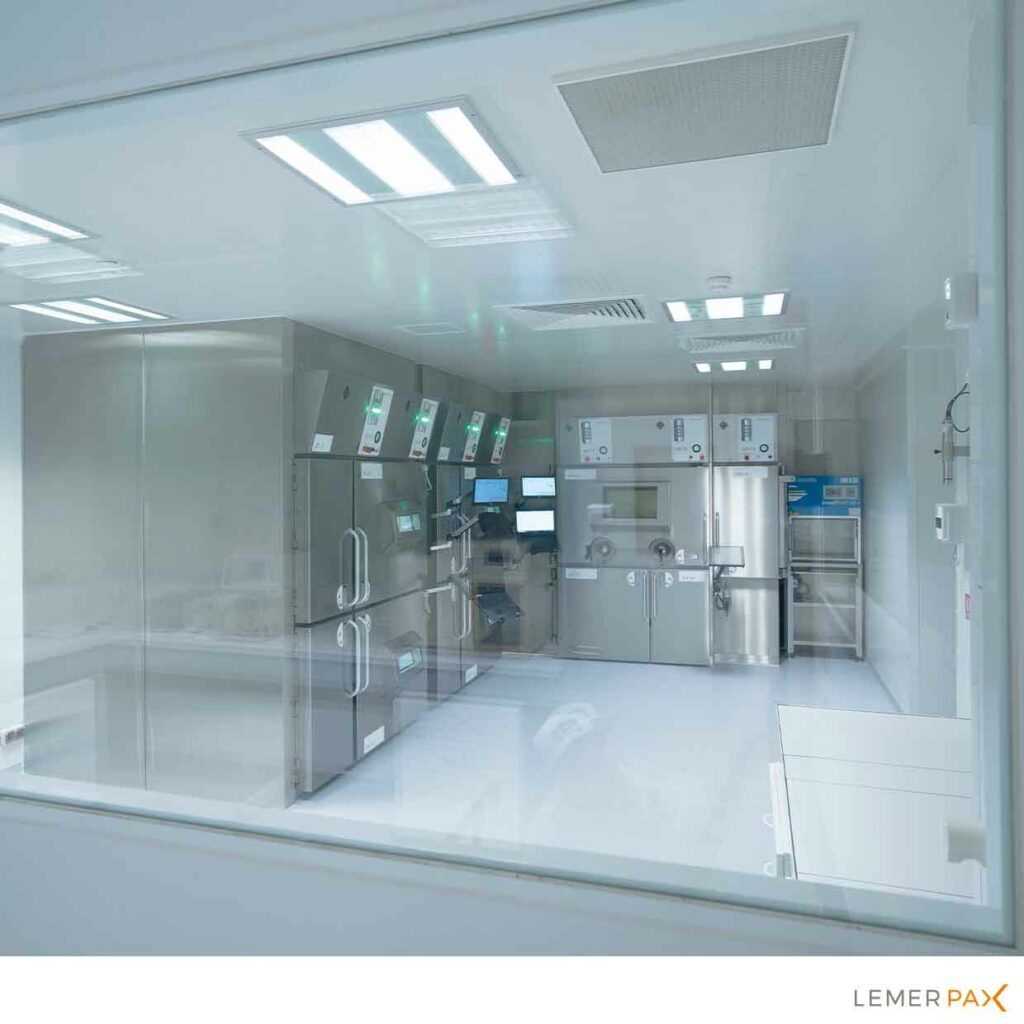
Radionuclides with widely varying profiles
A CDMO line serving multiple clients or multiple molecules must be able to handle isotopes with very different properties: half-lives ranging from a few minutes (¹³N, ¹⁵O) to several days (¹⁷⁷Lu, ²²⁵Ac), variable emission energies, and different physical states (solution, gas, solid). This diversity requires a level of modularity and adaptability that only purpose-built equipment can deliver.
Key equipment in a radiopharmaceutical CDMO line
Shielded cells: at the heart of the production line
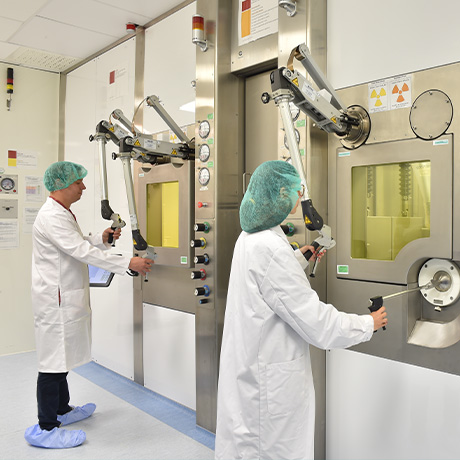
The shielded cell is the central component of a radiopharmaceutical CDMO production line. It forms the physical barrier between operators and radioactive sources, while enabling manufacturing operations to be carried out in a controlled environment.
A shielded cell for radiopharmaceutical production must meet several requirements simultaneously :
- Shielding suited to the radiation emitted by the isotopes handled (lead, leaded glass, depending on the case)
- Operator ergonomics: access to manipulators, visibility, comfort during long working sessions
- GMP compliance: smooth surfaces that are easy to decontaminate, with no areas where residue can accumulate
- Flexibility: the ability to accommodate different processes and production formats
- Connectivity: integration of information flows (traceability, quality control, supervision)
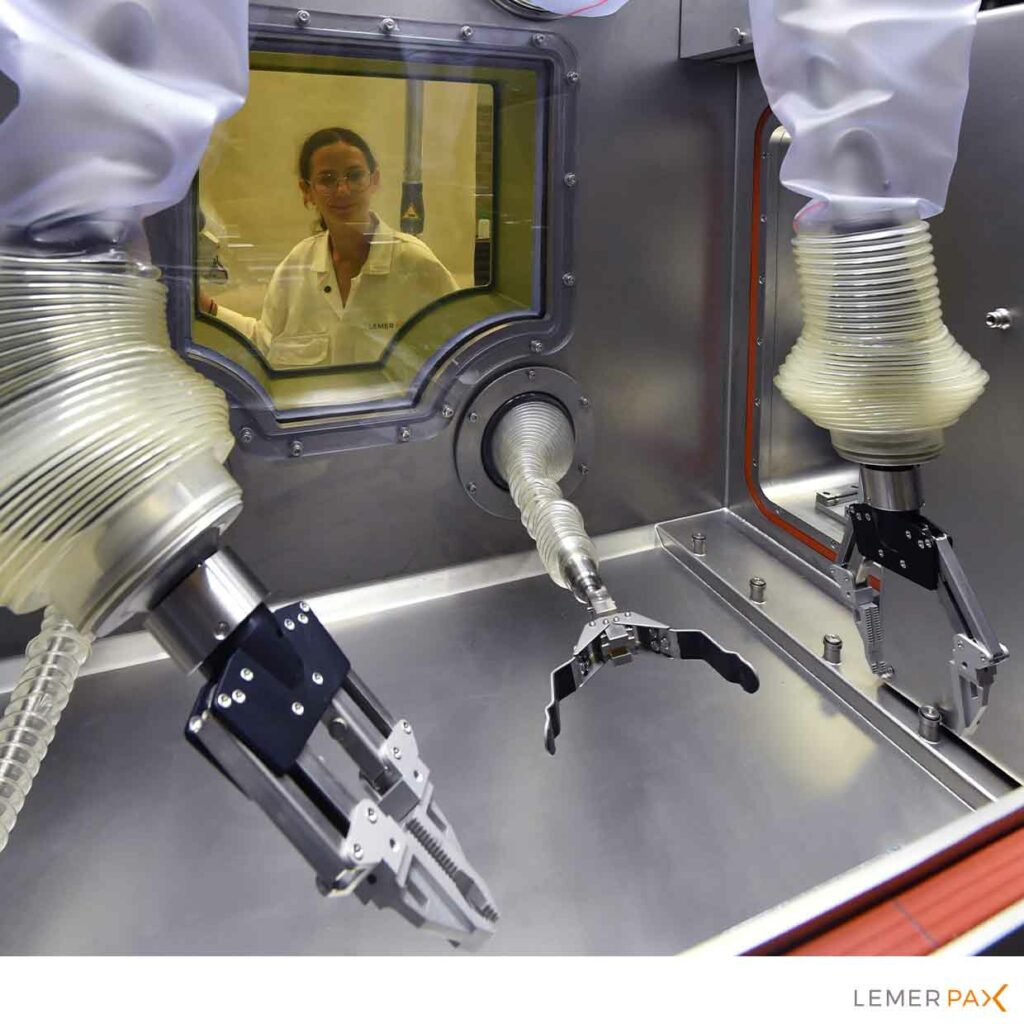
Lemer Pax’s long-standing expertise in designing shielded hot cells lines
A pioneer in radiation protection with more than 70 years of expertise, Lemer Pax develops cutting-edge equipment for the demanding fields of radiopharmacy, industry, and nuclear medicine.
This equipment is now integrated into CDMO lines designed to provide pharmaceutical and biotech companies with a GMP-compliant environment for the development, production, and delivery of innovative radio-medicine doses.
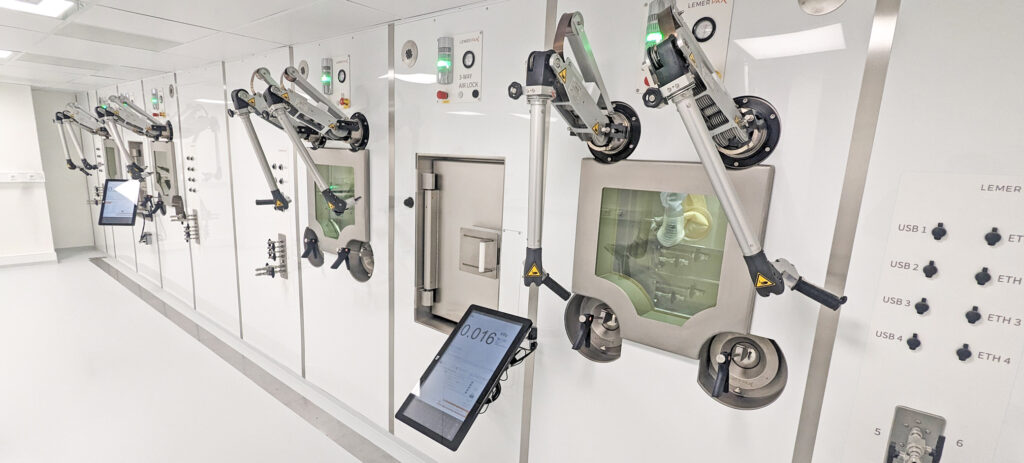
Netherlands, manufactured by Lemer Pax – 2023
To learn more about shielded hot cells and Lemer Pax’s solutions for radiopharmaceutical CDMO lines, contact our teams for a personalized consultation.

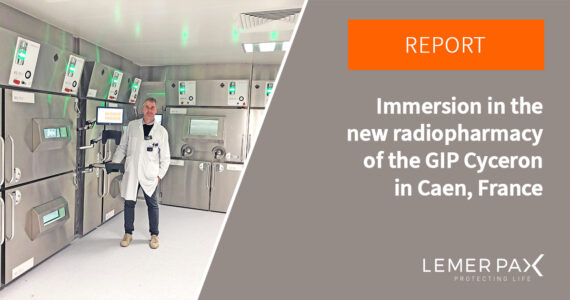
 France

