





Good Preparation Practices (GPP): impacts and developments in radiopharmacy
Good Preparation Practices (GPP) constitute the official regulatory framework governing the preparation of pharmaceutical products, both in pharmacies and hospitals. Published by the French National Agency for Medicines and Health Products Safety (ANSM), they serve as a reference for pharmacists and guarantee a high level of quality and safety.
The first version of the GPP dates back to 2007. An update, initiated in 2019, came into force in September 2023. This new development strengthens quality control requirements, adapts to new types of preparations and clarifies specific rules for certain practices, particularly in Radiopharmacy and Nuclear Medicine. In this article, we present the main changes introduced by the 2023 GPP, their impact on radiopharmacy practice and the major regulatory changes you need to be aware of.
The 9 key chapters of Good Preparation Practices – GPP 2023
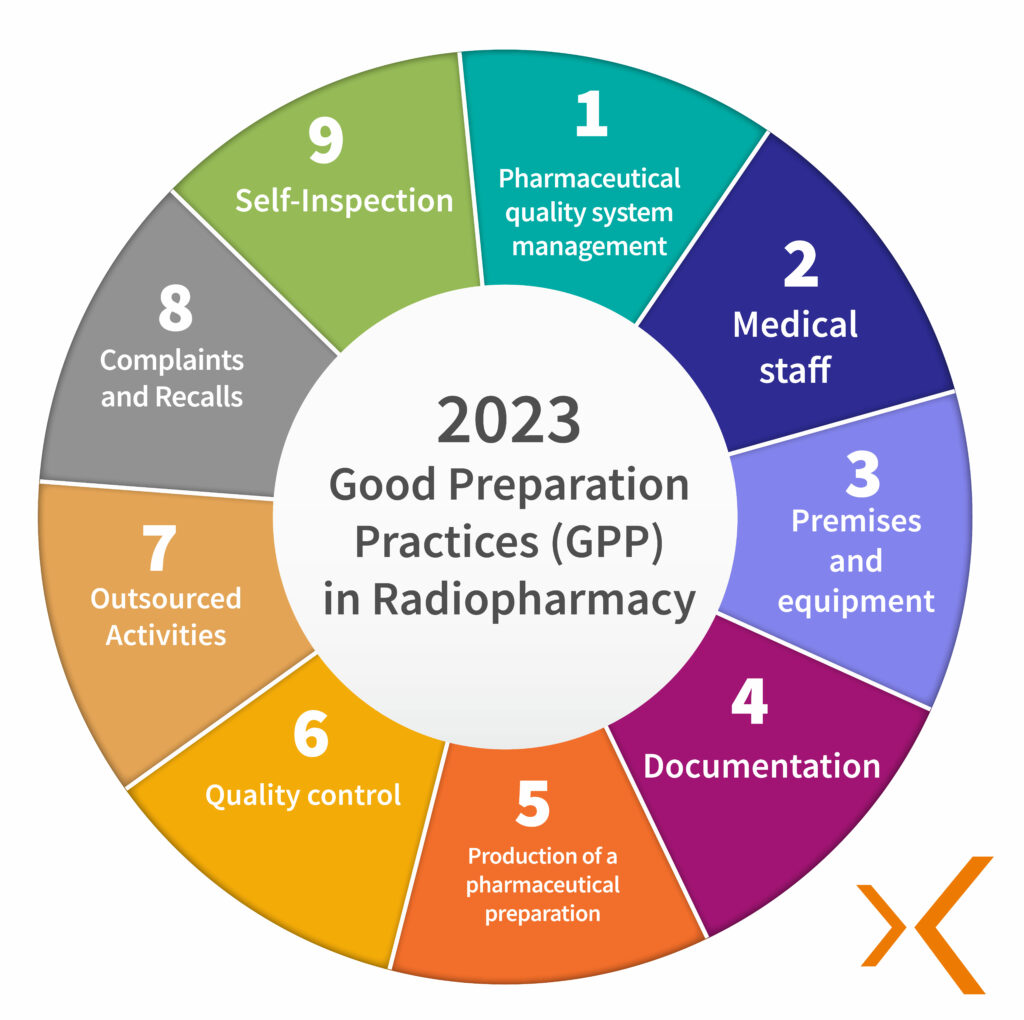
1. Pharmaceutical quality system management
The aim is to ensure that preparations comply with regulations by regularly assessing the effectiveness of the quality system. Each step must be documented, non-compliances reported and corrected, and no preparation may be dispensed without quality control and pharmaceutical validation.
A risk analysis (frequency and severity) is also mandatory: the pharmacist may refuse a preparation if the benefit/risk ratio is unfavourable.
2. Medical staff
Preparations must be carried out by qualified personnel: Pharmacy Technicians (PP/PPH), under the technical responsibility of the pharmacist. In radiopharmacy, Medical Electroradiology Technicians (MERM) may also participate, under the supervision of the radiopharmacist.
Initial and ongoing training is mandatory, including Aseptic Filling Tests (AFTs). Dress code rules in Controlled Atmosphere Zones (CAZs) are strictly defined according to the level of risk.
3. Premises and equipment
Premises must minimise contamination as much as possible (smooth surfaces, regular cleaning, controlled traffic flow). In radiopharmacy:
- negative pressure preparation chambers to contain radioactivity,
- positive pressure rooms to reduce microbiological risk.
Equipment must be qualified, maintained and checked regularly. IT systems must ensure complete traceability and be validated by specific tests.
4. Documentation
All procedures (receipt of raw materials, preparation, checks, cleaning, traceability) must be accessible and kept up to date in radiopharmacy.
5. Production of a pharmaceutical preparation
Each step is supervised to reduce the risk of cross-contamination. The pharmaceutical release of a radiopharmaceutical requires multiple checks. Raw materials must comply with European and French Pharmacopoeia specifications, and packaging must be suitable and safe.
6. Quality control
In radiopharmacy, controls must be traceable, reliable and carried out using regularly calibrated equipment.
They are carried out:
- upon receipt of raw materials,
- during preparation,
- before dispensing.
7. Outsourced Activities
A Hospital Pharmacy Department may outsource certain preparations to another authorized Hospital Pharmacy Department, under strict regulatory conditions.
8. Complaints and Recalls
In case of a quality defect, a batch recall may be initiated. Affected preparations must be clearly identified and isolated.
9. Self-Inspection
Regular self-evaluations strengthen the quality system and must be conducted by competent professionals independent of the inspected process.
The 4 Specific Guidelines of Good Preparation Practices
Additionally, four guidelines detail rules adapted to particular situations:
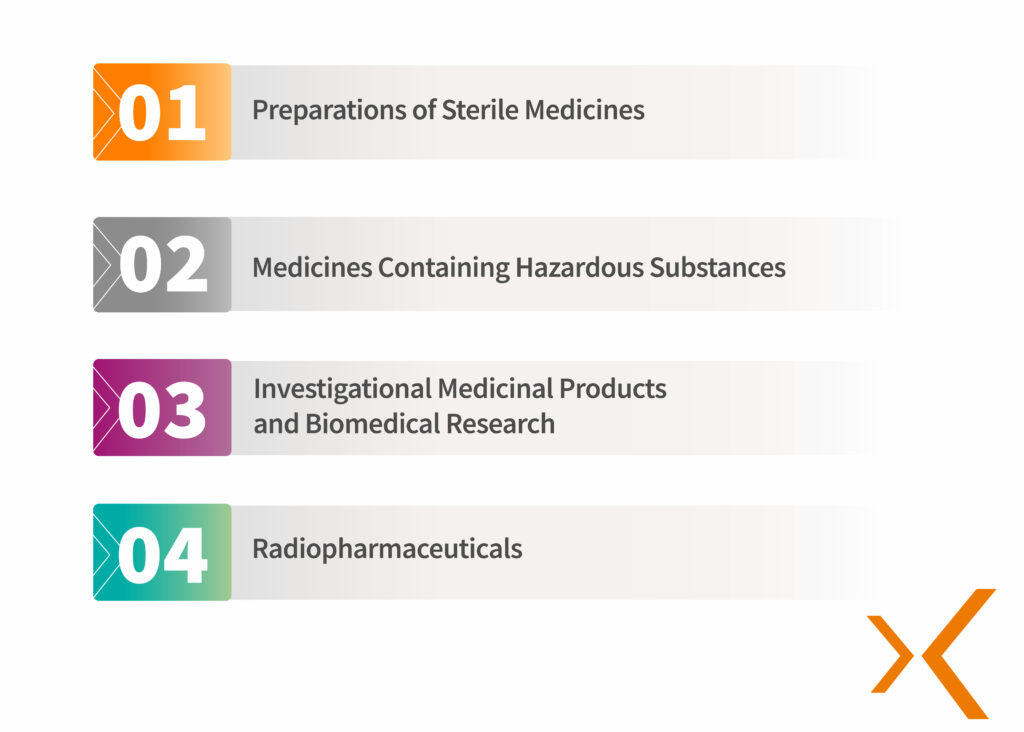
Guideline 1: Preparations of Sterile Medicines
Strict standards for open and closed systems, environmental monitoring (ZAC, particulate and microbiological control).
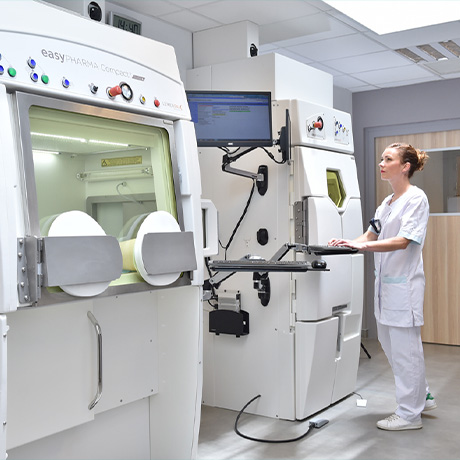
In radiopharmacy, the internal environment of hot cells must be Grade A, with requirements varying according to the type of preparation.
Guideline 2: Medicines Containing Hazardous Substances
Requirements regarding protective equipment (shielded hot cells, isolators).
Guideline 3: Investigational Medicinal Products and Biomedical Research
Regulation of preparations for clinical trials, with specific labeling and storage conditions.
Guideline 4: Radiopharmaceuticals
A key chapter for radiopharmacies, including:
- mandatory positive-pressure Controlled Atmosphere Areas (ZAC) with controlled pressure cascades,
- shielded hot cells adapted to radionuclides,
- aseptic preparation preferably in closed systems (Grade A in a Grade D environment),
- quality control independent of preparation activities,
- mandatory pharmaceutical release by a radiopharmacist.
Specificities of Radiopharmacy: Between Quality and Radiological Protection
Radiopharmacy is an activity subject to dual authorization:
- ARS (Regional Health Agency) for medicinal product aspects,
- ASNR (Nuclear Safety and Radiological Protection Authority) for radiological protection.
The emphasis on “unidirectional workflow,” the use of hot cells with entry/exit airlocks, the management of dose calibrators, and strengthened traceability reflect the intent to harmonize and secure practices.
The major novelty in the 2023 GPP is the priority given to microbiological quality: positive-pressure rooms and negative-pressure hot cells, even if this implies a compromise with certain radiological protection constraints.
The update of the 2023 Good Preparation Practices marks an important milestone for radiopharmacy. It strengthens requirements for quality, safety, and traceability while adapting the regulations to the specificities of radiopharmaceuticals.
These changes will require organizational and technical adjustments from teams, but they represent significant progress for patient safety and the reliability of preparations.

 France

